Official press release
The perfect match for Digital Signage excellence
ProDVX today announced full certification of BrightSign’s XC2055 and XC4055 media players across the complete range of ProDVX interactive touch displays. This certification ensures customers benefit from a proven combination of high-performance hardware designed for demanding digital signage environments.
Seamless Compatibility
BrightSign’s XC players, powered by BrightSignOS™, are purpose-built for digital signage and integrate effortlessly with ProDVX displays. Together, the solutions connect to BrightSign’s global network of CMS partners, delivering flexibility and freedom of choice for any signage project.
Power of the XC Players
The BrightSign XC5 line is the ultimate PC alternative, built to deliver breathtaking experiences across DVLEDs, video walls, and other immersive installations. Featuring 8K video, advanced 3D motion graphics, and multiple HDMI outputs, the Intel-based XC5 players deliver unmatched performance, scalability, and vivid visuals across one or multiple screens.
Benefits for Customers
For Integrators & Resellers
For End Users
Traditional workplace models were built around predictability. Most employees worked in the same place at the same time every day, and office layouts reflected this stability. Hybrid working has fundamentally disrupted this pattern.
Attendance now fluctuates depending on schedules, meetings and personal working preferences. This variability creates new challenges for organisations managing office space, with some areas becoming overcrowded while others remain underused.
Without clear visibility into how offices are being used, businesses can face frustrating imbalances. Meeting rooms may be fully booked on peak days while large areas of the office sit empty at other times. Research suggests that more than a third of UK organisations lose up to a full day of operational time each week due to inefficient workspace management.
In response, organisations are rethinking how office space is organised. Instead of providing a dedicated desk for every employee, many workplaces now offer a mix of spaces designed for different activities, from quiet focus areas to collaboration zones and meeting rooms.
This reflects a simple reality: people now come to the office for different reasons than they once did. While individual tasks can often be completed remotely, the office increasingly supports activities that benefit from in-person interaction, such as collaboration, mentoring and relationship building.
Designing spaces that support these different types of work requires organisations to better understand how employees actually use the workplace.
To support these new workplace models, digital workplace tools and building technologies are helping organisations gain a clearer understanding of how their offices are used. As more systems become connected, organisations can begin to see patterns in how people move through and interact with workplace spaces.
These insights provide a more accurate picture of how the office functions day to day. Organisations can identify which spaces are most valuable, when demand peaks and where resources may be underused. This helps organisations make more informed decisions about workplace layouts, capacity and future workplace investment.
Rather than relying on assumptions about how the workplace should operate, organisations can respond to real patterns of behaviour. In this way, workplaces can evolve alongside the needs of the workforce rather than remaining static environments that only change occasionally.
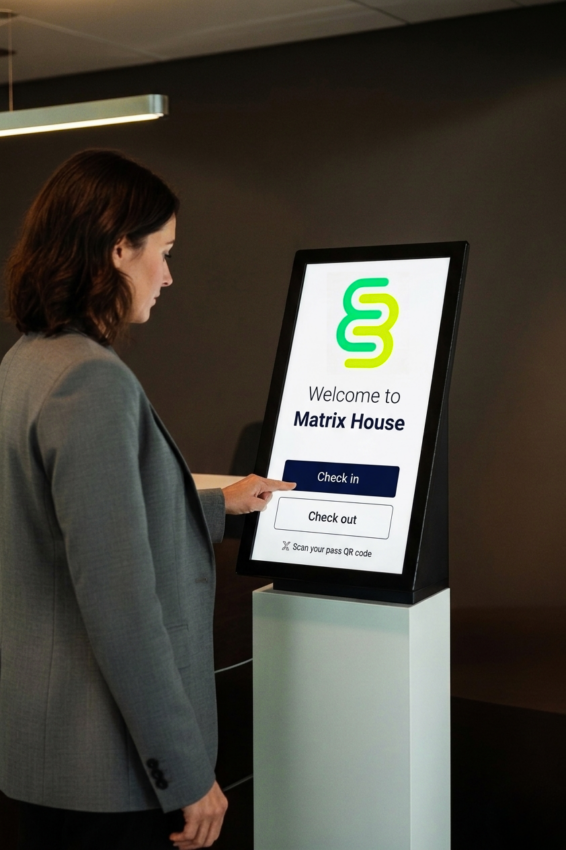
Hybrid working offers greater freedom for employees, but it also introduces new logistical challenges. Many organisations still rely on general office tools such as calendars or spreadsheets to manage desks, meeting rooms and other shared workplace resources. These tools were never designed to handle the complexity of modern hybrid work.
When workspace management becomes fragmented or unclear, employees may arrive at the office only to struggle to find available desks, meeting rooms or the right space for scheduled activities. These small frustrations can quickly undermine the benefits of flexible working.
To address this, organisations are prioritising workplace systems and processes that make offices easier to navigate. Clear visibility of available spaces, intuitive tools and seamless integration with everyday work platforms are becoming essential elements of an effective workplace strategy.
Alongside technology and flexibility, another major shift shaping the future of the office is the growing focus on employee experience. Organisations increasingly recognise that workplace design directly affects productivity, wellbeing and engagement.
Workplaces that feel welcoming, intuitive and easy to use are more likely to encourage employees to spend time there and contribute to a positive workplace culture. Accessibility is also becoming a key priority. Forward thinking organisations are examining both the physical and digital aspects of their environments to ensure they support the needs of all employees.
This includes everything from adaptable layouts and clearer signage to digital systems that are easy for everyone to use. The goal is to create workplaces where people can work comfortably and effectively, regardless of their needs, working style or schedule.
The transformation of the workplace is far from complete. As hybrid models continue to evolve, organisations will keep experimenting with new ways to support both productivity and flexibility. What is becoming increasingly clear is that the office is not disappearing, but its role is changing.
Rather than being the default location for daily work, it is becoming a destination where people come together intentionally to collaborate, share ideas and strengthen relationships that are often harder to build remotely.
This shift means organisations must think more strategically about how workplaces are designed and managed. The most successful workplaces will combine flexibility, thoughtful design and smart use of technology with a strong focus on employee experience and accessibility.
Offices will remain an important part of the working landscape, particularly as spaces for collaboration, creativity and connection. However, they will increasingly be designed to adapt alongside the needs of employees and organisations rather than remaining fixed environments. In the years ahead, the most effective workplaces will not simply accommodate change. They will be designed to evolve with it.

Let us know!